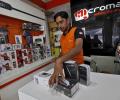
At least two of them - Lava and Micromax - are arming themselves against the Chinese rivals which made them insignificant in the local market over the past few years.

In spite of being attacked from all corners, a faltering supply chain and negative sentiments soaring high among the local consumers, top Chinese smartphone brands gained market share during the most critical phase - the April-June quarter of this year.

SVAMITVA is a new government project that primarily aims to demarcate abadi areas that includes inhabitant land, inhabited areas contiguous to abadi and wadis/basties in rural areas, using drone surveying technology.

Citing unviable duty structure on key components like flat panels and open cell parts, Samsung had shuttered its TV assembly lines in Tamil Nadu in 2018.

The Kanakia group, from which Mapletree did the purchase, had bought the plot from India Tube Mills and Metal Industries for Rs 363 crore in 2018.

The US tech major is planning to begin local production of its upcoming iPhone 12 by next April - within six months of its launch.

The Q3 office rebound growth was led by Bengaluru and Hyderabad, which together accounted for nearly 80 per cent of the net absorption in Q3.

Though leading brands like Samsung, Apple, Xiaomi, OnePlus, and Oppo managed to absorb the initial lockdown shock and resumed their local production back to 60 per cent, they would likely suffer a 20-25 per cent loss of sales in the October-December quarter.

For India to be atmanirbhar, domestic manufacturers cannot remain merely assemblers of imported parts. Manufacturing in India cannot survive on support of imports forever.

After six weeks into the second half, the faltering offline channel, which traditionally rakes in 60 per cent of sales for the market, has become the biggest hurdle towards the path of revival.

Till recently, iPhone production in India was limited to older models at a lower price tag. So far, Apple has localised production of five smartphone models - iPhone SE (1st Gen), 6S, 7, XR and 11.

Despite a 56 per cent fall in residential launches in the first half of the year compared to the second half of 2019, Anarock Property Consultants believes that consolidation in residential real estate is expected to gain ground, and that branded players may garner a market share of 75-80 per cent.

Retailers want rental waivers should be extended for a few more months, since business is not expected to pick up before the Dussehra-Diwali period, which falls in October-November.

From market leader HP and premium player Apple to China's Lenovo and Asus, all major brands in the market are witnessing rapid surge in the demand for notebooks.

The steep rise in prices of key components, coupled with a ban on the import of finished sets, is expected to hit prominent Chinese brands, such as OnePlus, Xiaomi, TCL, and Realme.
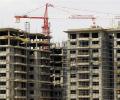
However, both developers as well as analysts are hopeful that these business metrics will pick up once activity resumes.

Streamlining its delivery network and shifting focus back to the mass segment - at a time when competitors were struggling to restore normalcy in operations due to the pandemi - aided the firm's revival.

The demands from retailers are fourfold: One, allow kiranas, general trade stores, supermarkets, hypermarkets, and wholesalers to operate every day of the week till 9 pm. Two, ensure uniform and regular opening of all categories of retail. Three, hassle-free movement of goods and employees, and four, lift bans on malls in states like Maharashtra.

Mumbai's property markets, where prices earlier crossed Rs 1 lakh per sq. ft in South Mumbai, are seeing a 20-25 per cent markdown from last year's levels.

Real estate development on Mumbai airport land and the work on Navi Mumbai airport have been inordinately delayed, which have prompted rating downgrades and raised questions on its financial capabilities. It is also trying to stave off Adani group's entry as a shareholder in the Mumbai airport project.
 © 2026 Rediff.com - Advertise with us - Disclaimer - Privacy Policy - Sitemap - Feedback - About us - Terms of use - Grievances